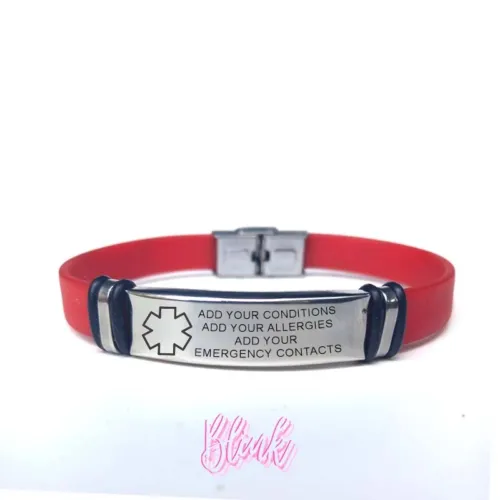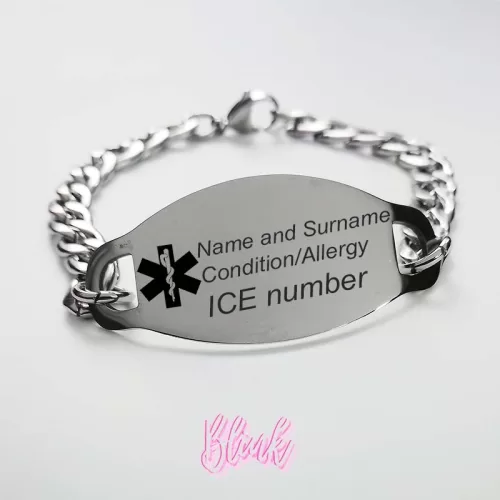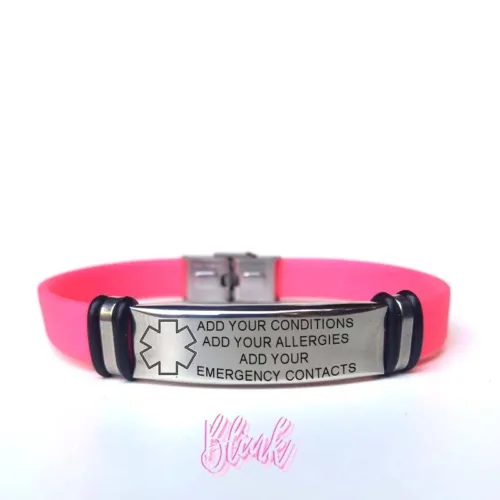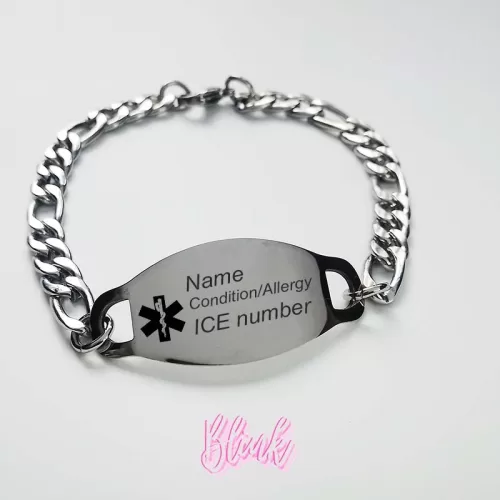



ICE bracelets
In Case of Emergency (ICE) bracelets are an essential accessory for individuals who want to ensure that they receive the appropriate medical care in case of an emergency. These bracelets have become increasingly popular in recent years, as they provide an easy and effective way to communicate important medical information to first responders and medical professionals.
Here are some key things to know about ICE bracelets:
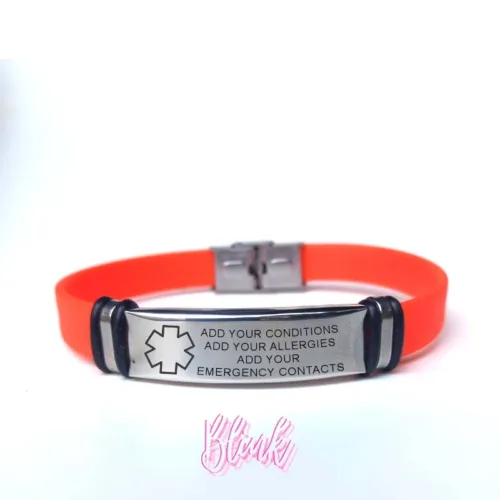
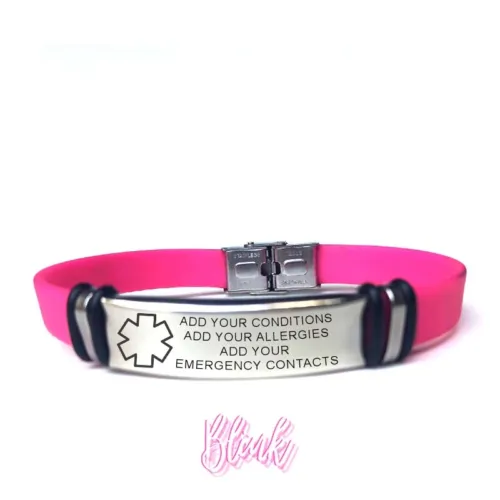
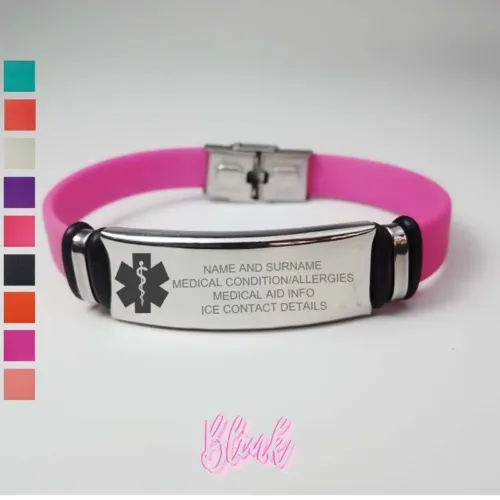
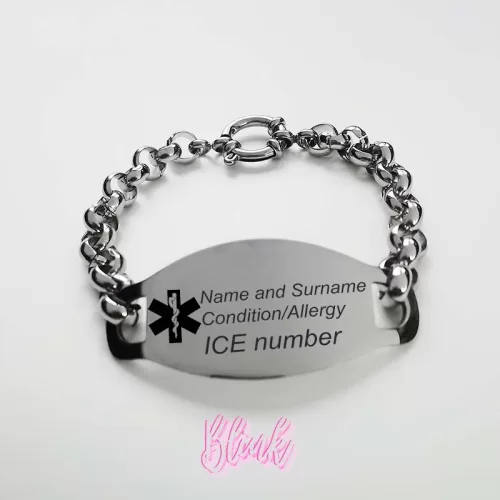
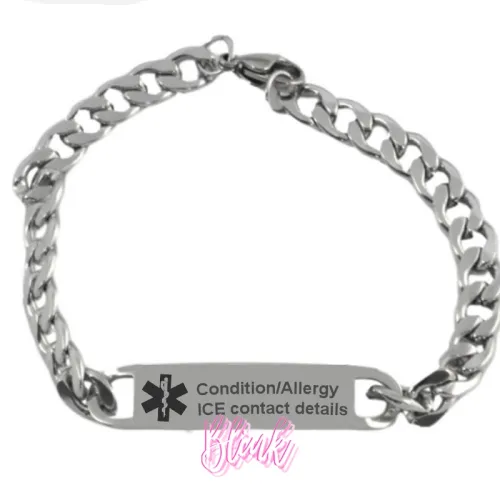
- Information: ICE bracelets typically include important medical information, such as allergies, medications, and medical conditions, which can be vital in an emergency. This information can be engraved on the bracelet or included on a card that is stored in a pocket or compartment on the bracelet.
- Visibility: ICE bracelets are designed to be highly visible, so that first responders and medical professionals can easily identify them in an emergency. They are often made from bright colors or reflective materials, making them easy to spot even in low light conditions.
- Durability: ICE bracelets are made from high-quality materials, ensuring that they are durable and can withstand daily wear and tear. This is important, as individuals may need to wear their bracelet at all times, including during physical activity or while swimming.
- Comfort: Many ICE bracelets are designed to be comfortable to wear for extended periods, making them suitable for individuals who need to wear them all the time. They are often adjustable, so that they can be customized to fit comfortably on different wrist sizes.
- Cost: Despite their importance, ICE bracelets are typically very affordable, making them accessible to individuals on a budget. They are often priced similarly to regular bracelets, making them an accessible and affordable option for individuals of all ages and income levels.
- Ease of Use: ICE bracelets are easy to use, and require no special training or knowledge. Individuals can simply wear their bracelet and feel confident that their important medical information is readily available in case of an emergency.
In conclusion, ICE bracelets are an essential accessory for individuals who want to ensure that they receive the appropriate medical care in case of an emergency. With important medical information engraved or stored on the bracelet, high visibility, durability, and affordability, ICE bracelets are a simple and effective way to communicate critical medical information to first responders and medical professionals. So if you haven’t already, consider investing in an ICE bracelet to keep yourself safe in case of an emergency.
Some Questions about Medical Alert Bracelets
ICE on a medical bracelet stands for “In Case of Emergency.” This term is often used to identify a person’s emergency contact or important medical information that first responders or medical personnel should be aware of in case of an emergency.
Medical bracelets with ICE information are often worn by people with medical conditions such as allergies, diabetes, epilepsy, heart conditions, or other conditions that may require emergency treatment. These bracelets typically have the person’s name, medical information, and emergency contact information engraved on them.
The ICE information on a medical bracelet can help ensure that the person receives prompt and appropriate medical treatment in an emergency situation, as it provides critical information to first responders or medical personnel.
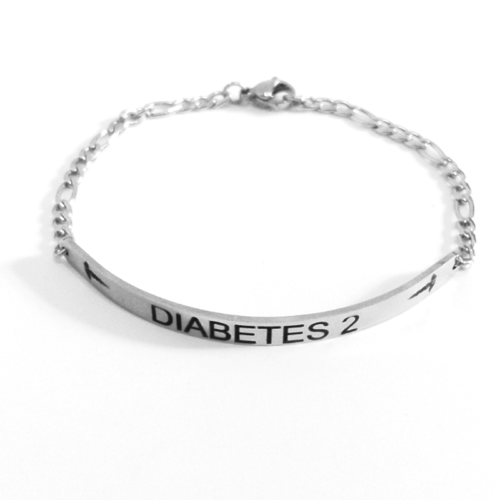
Yes, it is recommended that people with diabetes wear a medical alert bracelet. Diabetes is a medical condition that requires close monitoring of blood sugar levels, and people with diabetes are at risk of experiencing a range of medical emergencies such as hypoglycemia (low blood sugar) or hyperglycemia (high blood sugar).
Wearing a medical alert bracelet can help ensure that first responders or medical personnel are aware of the person’s diabetes and any other relevant medical information in case of an emergency. The bracelet should include important information such as the person’s name, the fact that they have diabetes, the type of diabetes they have (Type 1 or Type 2), and any other relevant medical conditions or medications they may be taking.
Additionally, a medical alert bracelet can also include emergency contact information, such as the name and phone number of a family member or friend who can be reached in case of an emergency.
Overall, wearing a medical alert bracelet is an important safety precaution for people with diabetes, as it can help ensure that they receive prompt and appropriate medical treatment in case of an emergency.
Medical ID bracelets are designed to provide important medical information about the wearer in case of an emergency. They work by displaying critical medical information, such as the wearer’s name, medical conditions, allergies, and emergency contact information, which can be quickly and easily accessed by first responders or medical personnel.
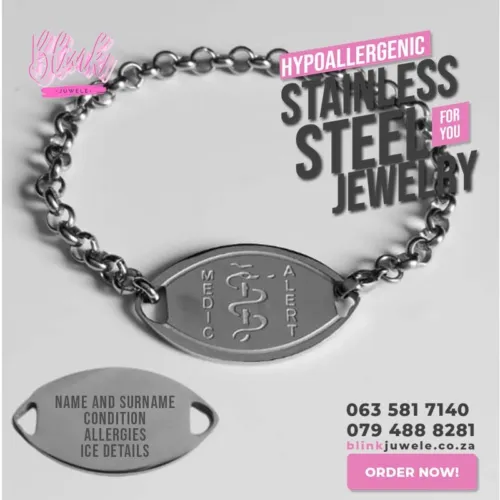
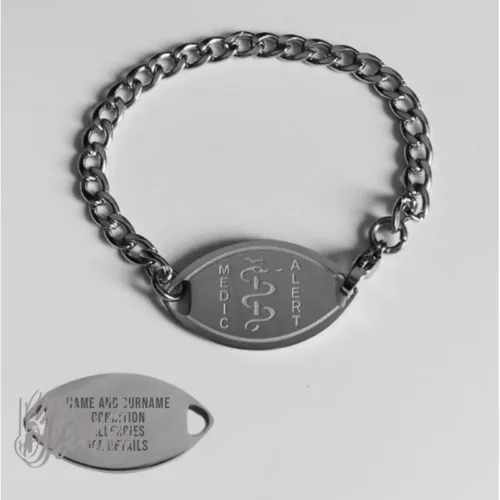
Medical ID bracelets typically feature an engraved metal plate or tag that is attached to a bracelet or band. The plate or tag is engraved with important medical information, such as the person’s name, medical conditions, and any relevant allergies or medications. Some medical ID bracelets also include a unique identification number, which can be used to access additional medical information stored in a secure online database.
When first responders or medical personnel encounter someone wearing a medical ID bracelet, they can quickly read the engraved information to learn about the person’s medical conditions and any other important information. This can help them make more informed decisions about the person’s treatment and ensure that they receive the appropriate care in a timely manner.
Overall, medical ID bracelets are an important tool for people with medical conditions, as they can provide critical medical information in case of an emergency and help ensure that the person receives prompt and appropriate medical treatment.
Medical bracelets are usually worn on the wrist that is less likely to be injured, such as the wrist that is opposite the person’s dominant hand. For example, if a person is right-handed, they may choose to wear a medical bracelet on their left wrist.
This is because if the person’s dominant hand is injured or incapacitated, they may not be able to communicate important medical information to first responders or medical personnel. Wearing the bracelet on the non-dominant wrist can help ensure that the information is readily available and easily accessible.
Ultimately, the choice of which wrist to wear a medical bracelet on is a personal one, and may depend on factors such as the person’s medical condition, personal preferences, and lifestyle. Some people may choose to wear the bracelet on both wrists, or on an ankle or neck chain, to ensure that the information is always readily available.
A medic alert bracelet should include important medical information that can help first responders or medical personnel make informed decisions about your care in case of an emergency. The following information is typically recommended to be included on a medic alert bracelet:
- Your name: This helps first responders identify you and ensure that they are providing the appropriate care.
- Your medical condition(s): This includes any medical conditions you have that require treatment or may impact your care, such as diabetes, heart disease, or allergies.
- Medications you are taking: This includes any prescription or over-the-counter medications you are taking, as well as any supplements or herbal remedies.
- Any allergies you have: This includes any allergies to medications, foods, or other substances that could impact your care.
- Emergency contact information: This includes the name and phone number of a family member or friend who can be reached in case of an emergency.
- Any special instructions: This includes any special instructions that first responders or medical personnel should be aware of, such as a Do Not Resuscitate (DNR) order.
Additionally, some people may choose to include other information on their medic alert bracelet, such as their blood type or any implantable devices they have, such as a pacemaker.
Overall, the information included on a medic alert bracelet should be clear and concise, and should provide critical information that can help ensure that you receive prompt and appropriate care in case of an emergency.
Welcome to the World of #Blink
Pretoria’s Largest Selection Of Stainless Steel Jewelry And ICE bracelets At The Lowest Prices In SA
We design and manufacture unique quality Stainless Steel Jewelry
Collection in Pretoria East or Ship all over South Africa
Hypoallergenic, non fading for all skin types
Subscribe for 15% Discount
Shop our Most Popular Medical Alert Bracelets


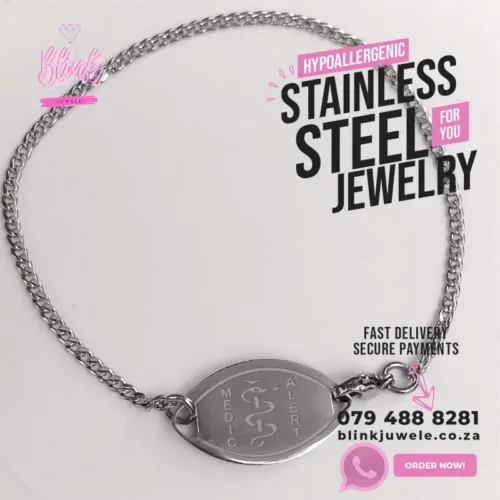

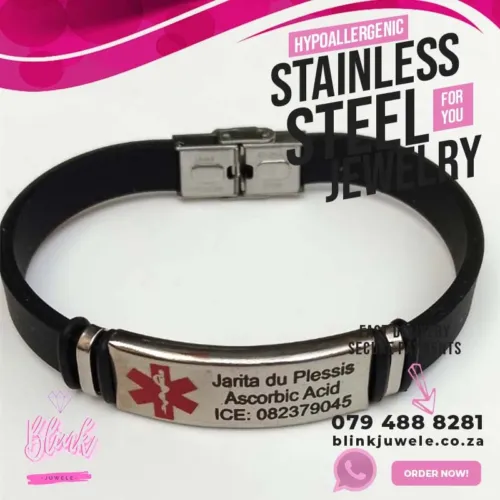

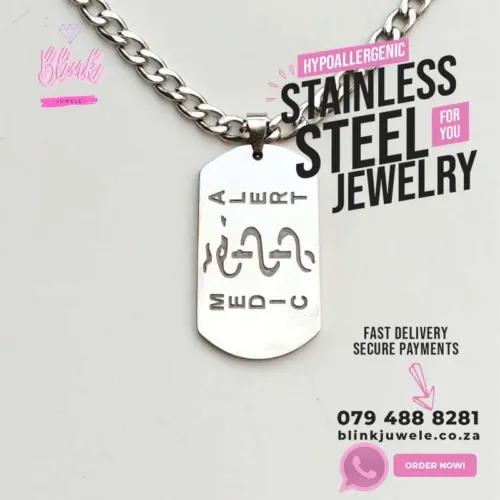
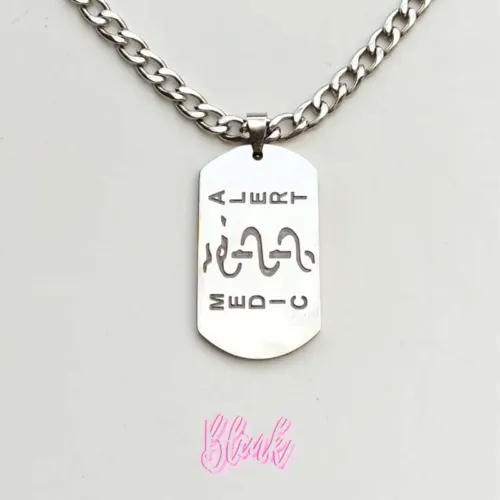


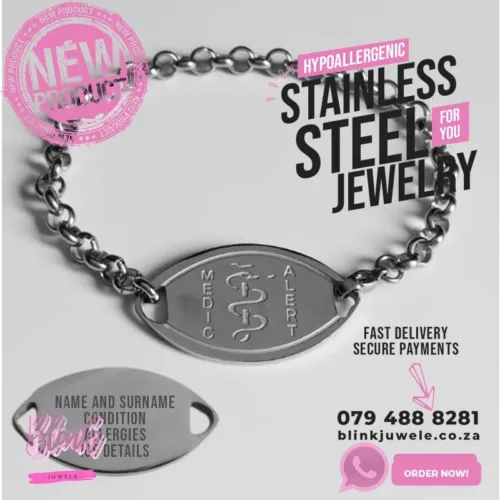


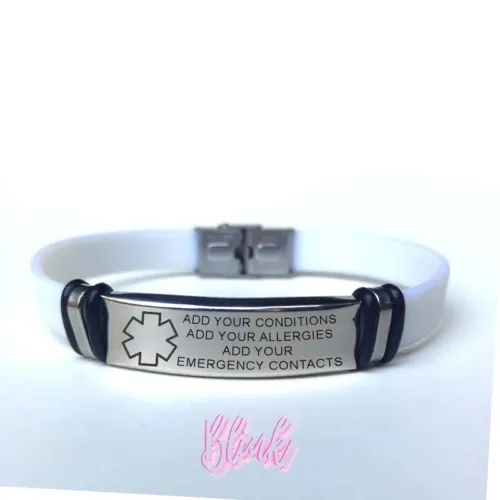

You might think we’re all about Stainless Steel Jewelry, but #Blink is about change! Changing the way people look. Transforming the way people feel. Changing people’s futures and their lives. Though our fashion-forward ICE bracelets are centered on fun, #Blink fulfills a serious mission. We believe that trendy Stainless Steel Jewelry can be available, and affordable, to women (and men) everywhere. We know that wearing a new look, and feeling confident in your appearance, builds amazing self-esteem. Our passion is inspiring dreams, empowering talents, and reaching goals by sharing our products and the excitement of #Blink. We see it happen every day.
Blink Agents/Resellers
This vision is made possible through the reach of #Blink’s Consultants. They’re the ones who bring our original designs to kitchen countertops and boutique shops. Our Consultants bring fun and fashion to everyday life, along with the chance to explore the #Blink opportunity for Jewelry Agents. Find us on Facebook and Instagram